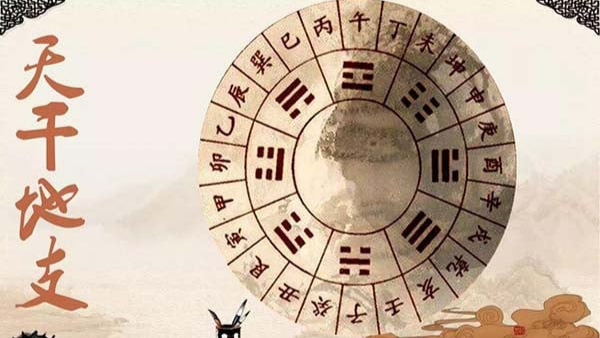
Heavenly Stems and Earthly Branches
Introduction
Heavenly Stems and Earthly Branches, known as "Tiangan Dizhi" in Chinese, form a dual system that has been used in various aspects of Chinese culture, including timekeeping, astrology, and divination. This system combines ten Heavenly Stems and twelve Earthly Branches to produce a 60-year cycle known as the sexagenary cycle, which has been a cornerstone of Chinese chronological and astrological computations for millennia.
Heavenly Stems
The Heavenly Stems are a sequence of ten Chinese characters, each associated with one of the five elements: Wood, Fire, Earth, Metal, and Water. These elements are further divided into Yin and Yang categories, leading to the ten Heavenly Stems: Jia (Yang Wood), Yi (Yin Wood), Bing (Yang Fire), Ding (Yin Fire), Wu (Yang Earth), Ji (Yin Earth), Geng (Yang Metal), Xin (Yin Metal), Ren (Yang Water), and Gui (Yin Water). The origins of the Heavenly Stems are deeply rooted in ancient Chinese cosmology and philosophy, where they were used to mark days, years, and even directions.
Earthly Branches
The Earthly Branches consist of twelve characters, each associated with an animal of the Chinese zodiac: Zi (Rat), Chou (Ox), Yin (Tiger), Mao (Rabbit), Chen (Dragon), Si (Snake), Wu (Horse), Wei (Goat), Shen (Monkey), You (Rooster), Xu (Dog), and Hai (Pig). The Earthly Branches are also linked to the twelve months of the lunar calendar, twelve hours of the day, and twelve directions. The number twelve is regarded as the governing number of the universe in this system, symbolizing the cyclical nature of time and existence.
The 60-year Cycle (Sexagenary Cycle)
The combination of the ten Heavenly Stems and twelve Earthly Branches yields a sequence of 60 pairs, known as the sexagenary cycle. This cycle serves multiple purposes in Chinese tradition, ranging from the calculation of years and days to astrological predictions and divination practices. Each year in the Chinese calendar corresponds to a specific pair of Heavenly Stem and Earthly Branch, which repeats every 60 years.
Cultural Significance
The Heavenly Stems and Earthly Branches are integral to the Chinese calendar system, which includes the shengxiao, or Chinese zodiac. The shengxiao is a repeating twelve-year cycle with each year represented by one of the zodiac animals, each of which is associated with one of the twelve Earthly Branches. This system is based on the Earthly Branches and plays a significant role in Chinese folk culture, particularly in the interpretation of personality traits and fortune-telling. The zodiac and its associated cultural phenomena, such as the "animal year," have been present in Chinese life from ancient times to the present.
Historical Context
The origins of the Heavenly Stems and Earthly Branches can be traced back to the early Chinese dynasties, where they were used in calendrical calculations and divination. These systems were essential for agricultural societies that relied on precise timing for planting and harvesting crops. Over centuries, the sexagenary cycle has been woven into the fabric of Chinese historical records, literature, and folklore, reflecting its enduring importance.
Connection to the Solar Terms
The Heavenly Stems and Earthly Branches are also interwoven with the 24 solar terms, a traditional East Asian lunisolar calendar system that reflects seasonal changes. Each solar term is associated with specific climatic and agricultural phenomena, providing a framework for activities such as farming. This integration highlights the harmonious relationship between human society and natural cycles in Chinese philosophy.
Artistic and Literary Influences
The Heavenly Stems and Earthly Branches have inspired a rich tapestry of artistic and literary works throughout Chinese history. From poetry to visual arts, these symbols have been used metaphorically to convey complex ideas about time, fate, and the cosmos. They often appear in classical Chinese poetry and paintings, where they serve as motifs for contemplating the passage of time and the interconnectedness of all things.
Contemporary Celebrations and Rituals
Despite the passage of time and modernization, the traditions associated with the Heavenly Stems and Earthly Branches continue to be observed, particularly during festivals and major life events. For instance, the concept of the "animal year" is celebrated during the Chinese New Year, with each zodiac animal influencing the themes and decorations of the festivities. Additionally, the intricate knowledge of these systems is passed down through generations, preserving their cultural heritage.








